
Interview with
SOFIA HAGEN
2 DEC 2025
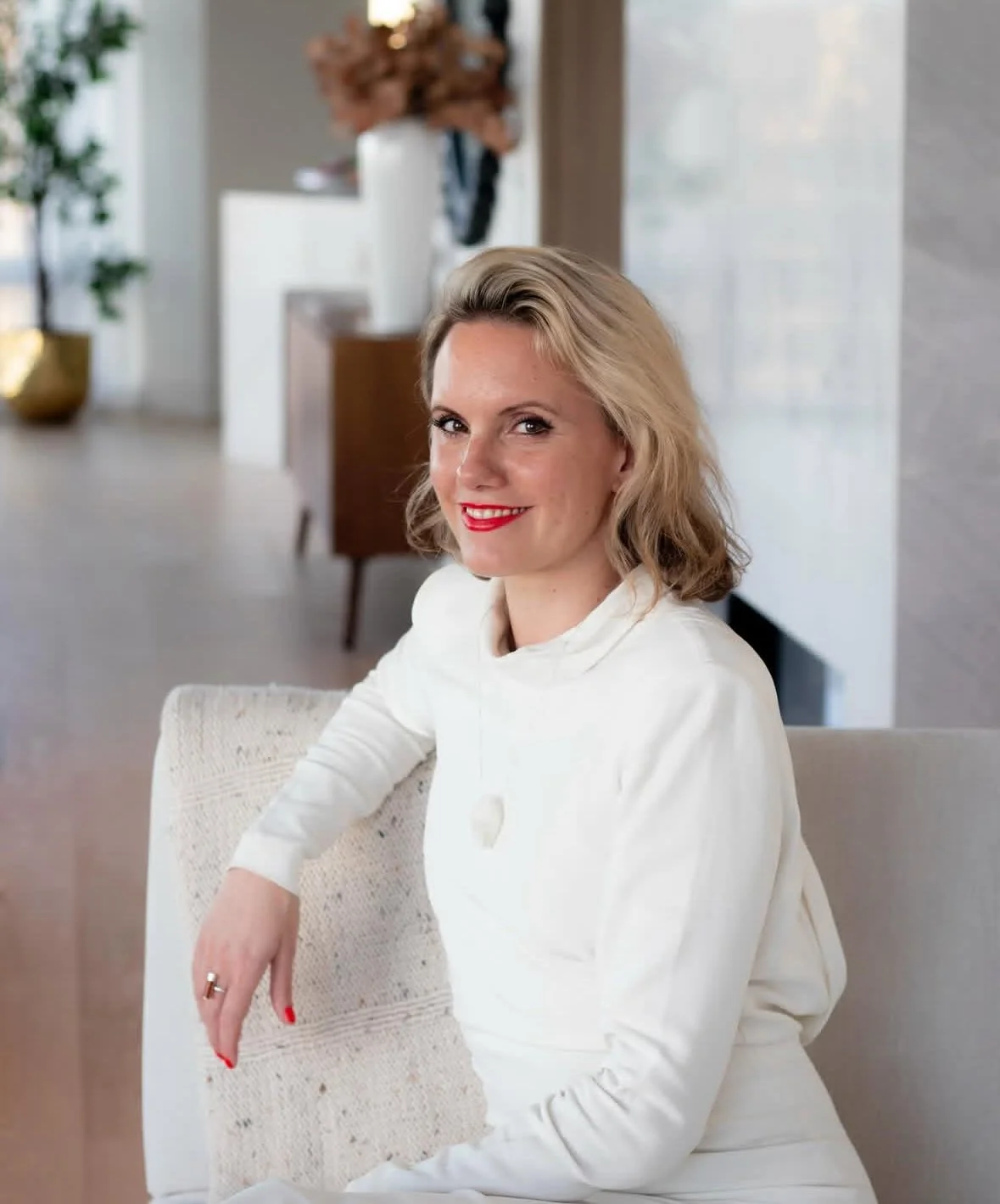
On December 2, 2025, Echoes of Future Matter founders Andrei and Alexey spoke with Sofia Hagen about digital craftsmanship, material experimentation, and the evolving relationship between technology and tactility.
In this conversation, Sofia reflects on how discovering new printable materials—from sawdust to sugar—sparks entire projects, why she insists on hand-shaping forms before machines take over, and how imperfection, unpredictability, and “poetic accidents” give life to computational design.
Andrei: How has collaboration with other artists and firms been important in your work? Have you ever been surprised by any collaboration in your creative path?
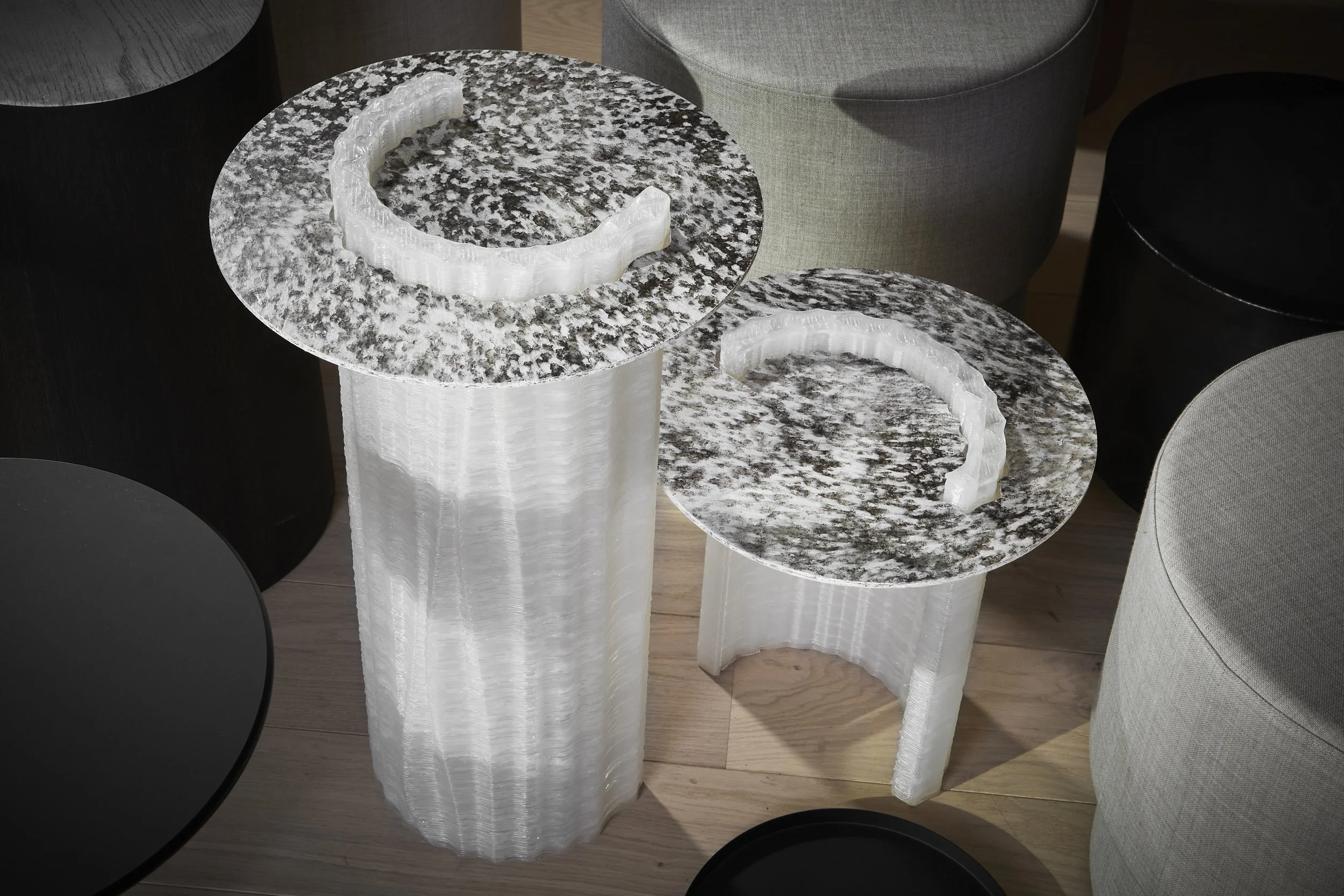
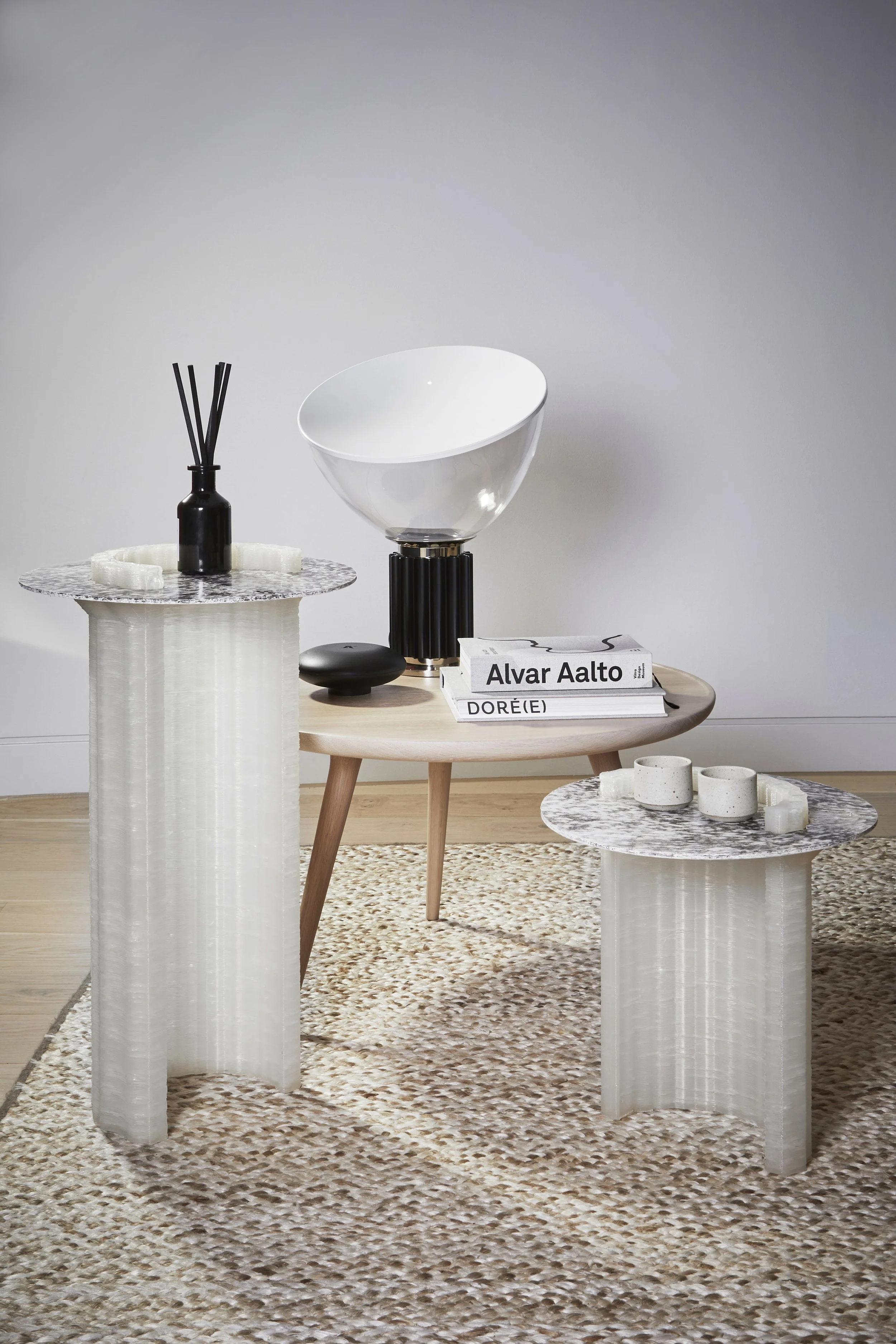
Sofia: Every collaboration brings surprise. With Novavita, the amount of recycled coffee in the mix changed the color of each tabletop. The Hempler project expanded far beyond furniture—it led to sound designers translating material frequencies into audio experiences, so people literally hear what they sit on. These collaborations created new creative layers: wellness, sound, performance, and community experience.
Andrei: What does “Echoes of Future Matter” mean to you — personally or poetically?
Sofia: I see an echo as a reflection—a return signal that is similar but changed. The further technology pushes us—AI, digital fabrication, synthetic imagery—the more we must ground ourselves in nature, tactility, sustainability. The echo of future matter is this reciprocity: innovation demanding reconnection to earth. In a world where AI generates hyper‑real scenes, physical grounding becomes essential.

Andrei: What material, if any, has shaped the way you think about form or space — and why?
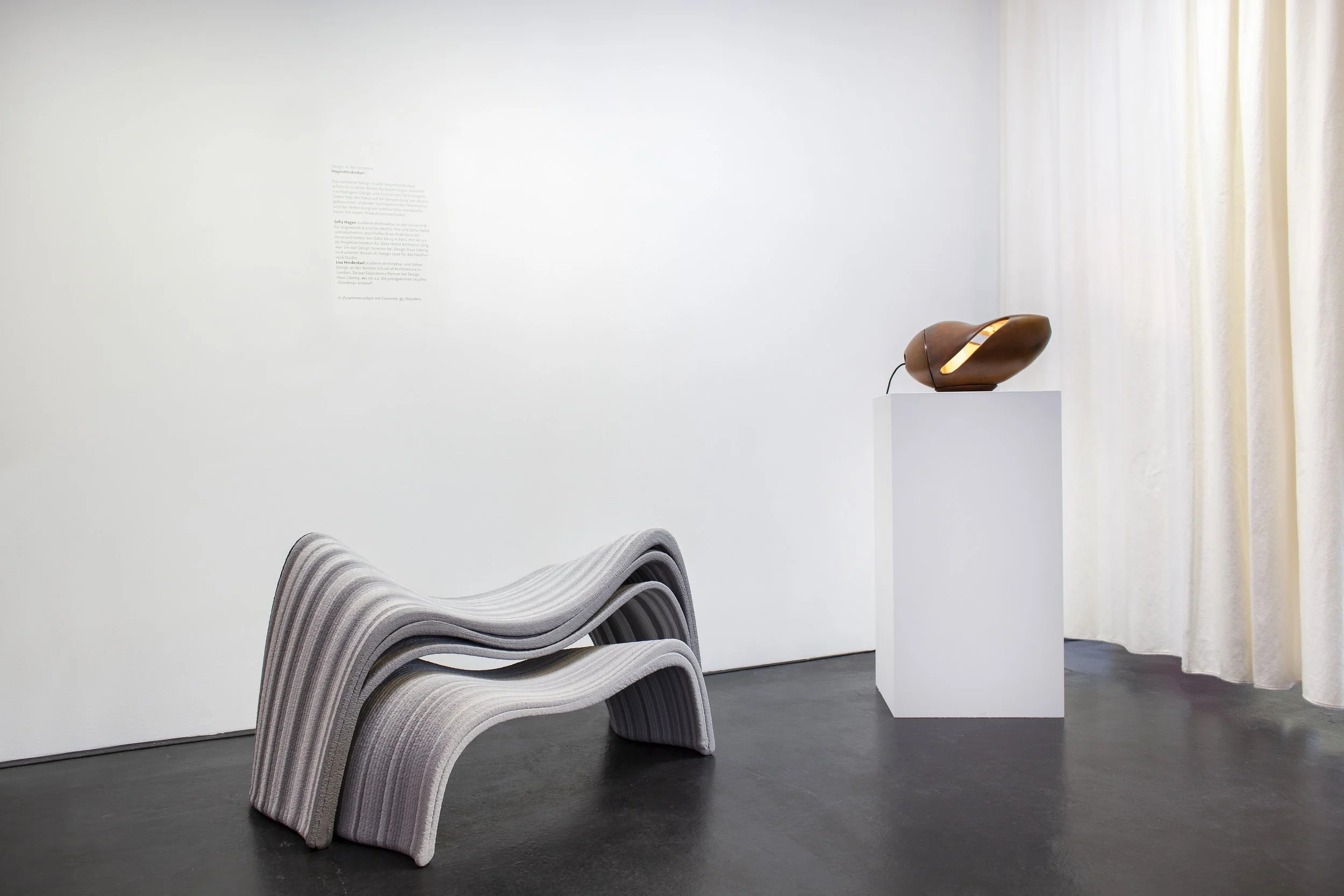
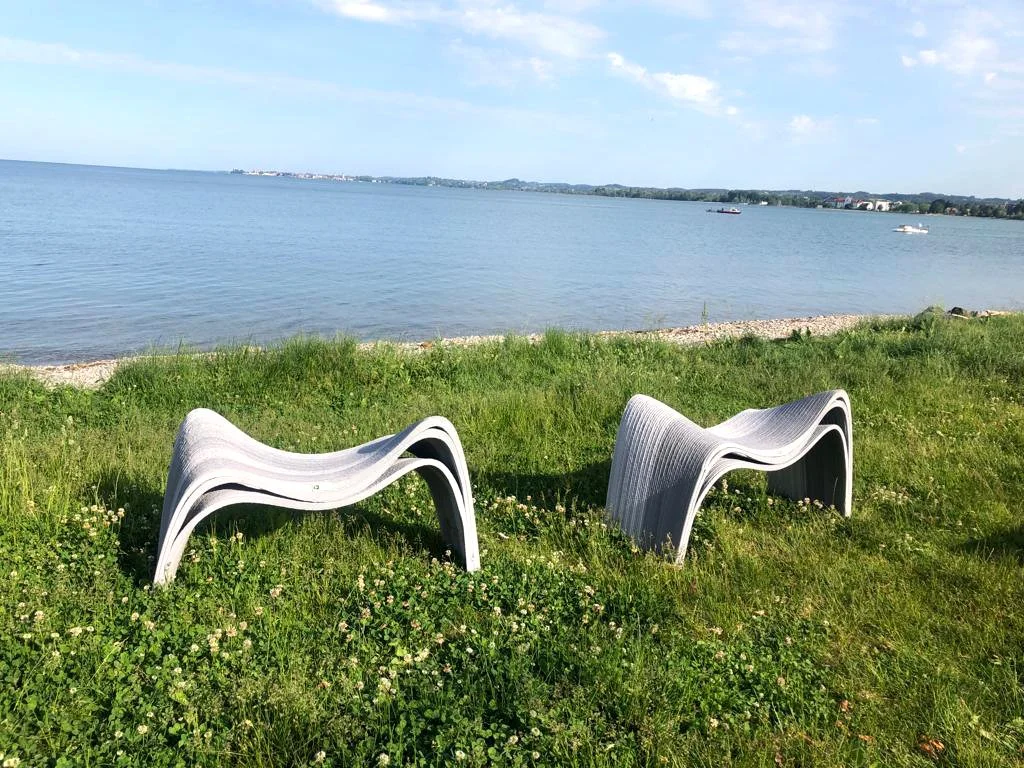
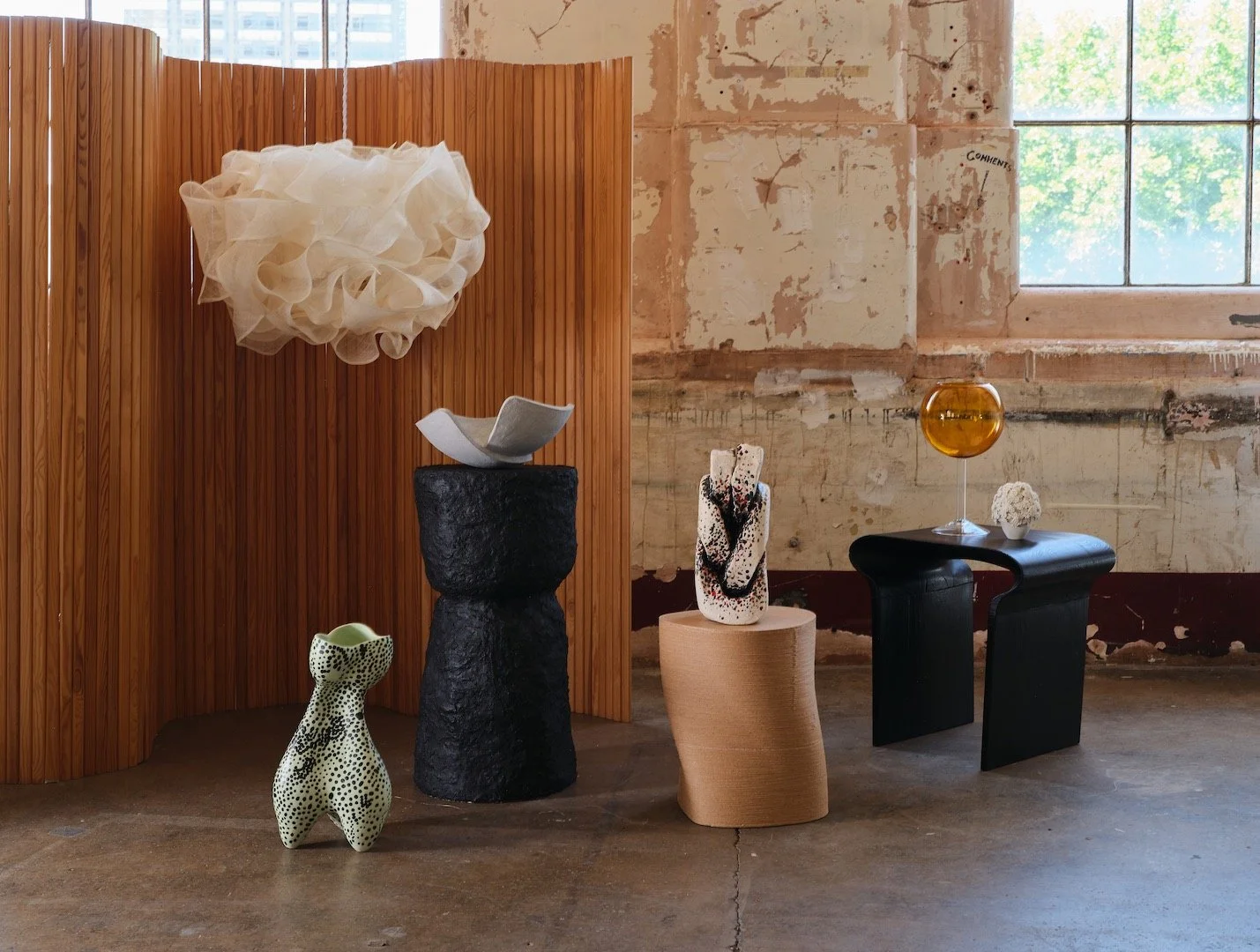
Sofia: I work with many different materials, and for me material, design, and fabrication always go hand in hand. Often I discover a new printable material and that immediately inspires a project—like the Cocoon light made of 3D‑printed sawdust developed at MIT, or the Contour benches made in Austria using concrete printing shaped by Alpine contour lines. Every new material changes how I see the world and opens new creative pathways.
Andrei: Where do you feel the line blurs between human touch and machine logic in your work? Where should humans intervene in automated processes?
Sofia: I hand‑model all my designs—I don’t script because I love the creative freedom of shaping forms myself. The machine takes over during printing, but after fabrication I always return to human craft: staining, sanding, brushing concrete smooth like a stonemason. Humans must intervene where ergonomics, intuition, and lived experience matter. For example, meditation furniture
Andrei: How do you relate to control and imperfection in the things you create?
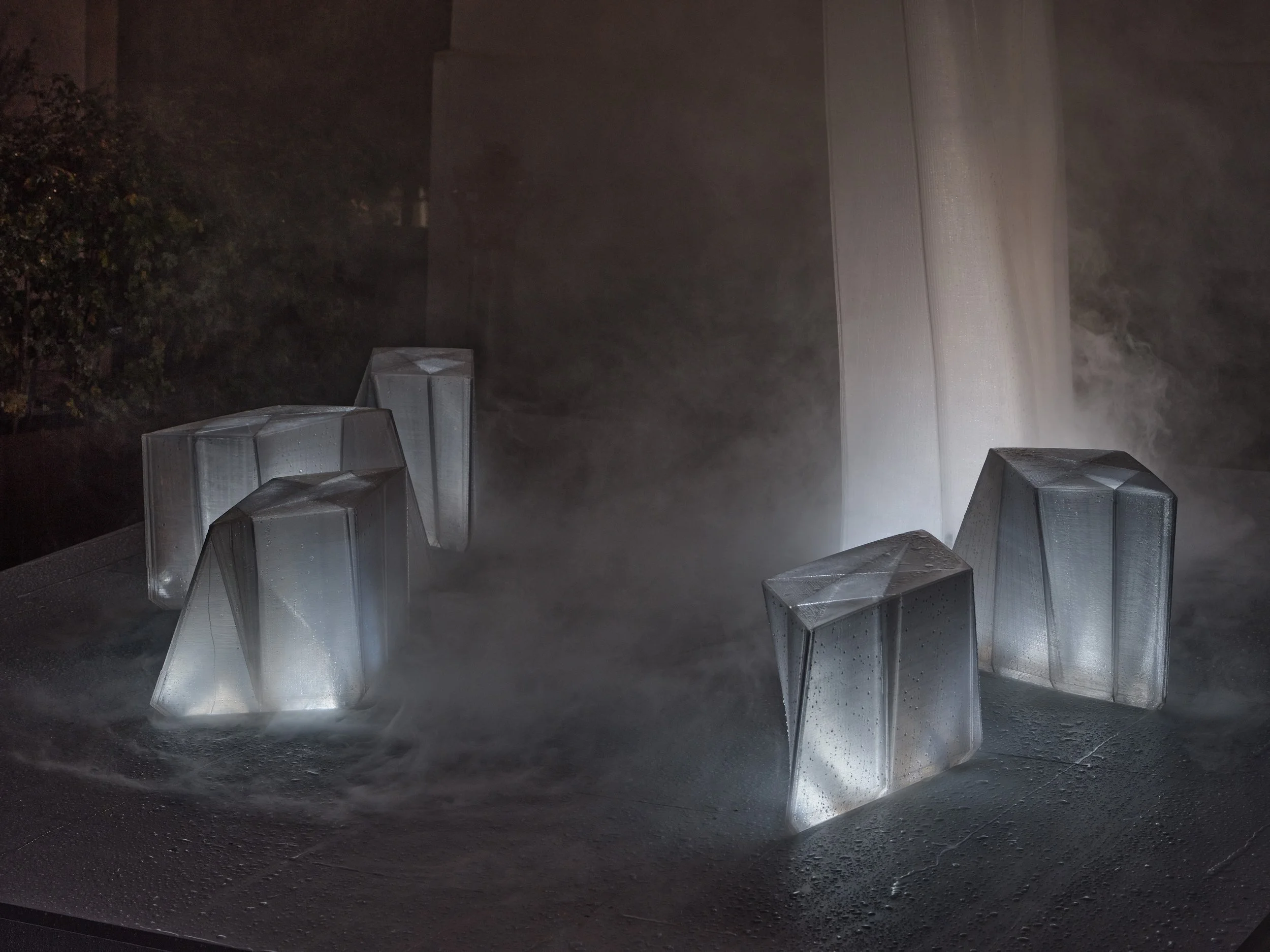
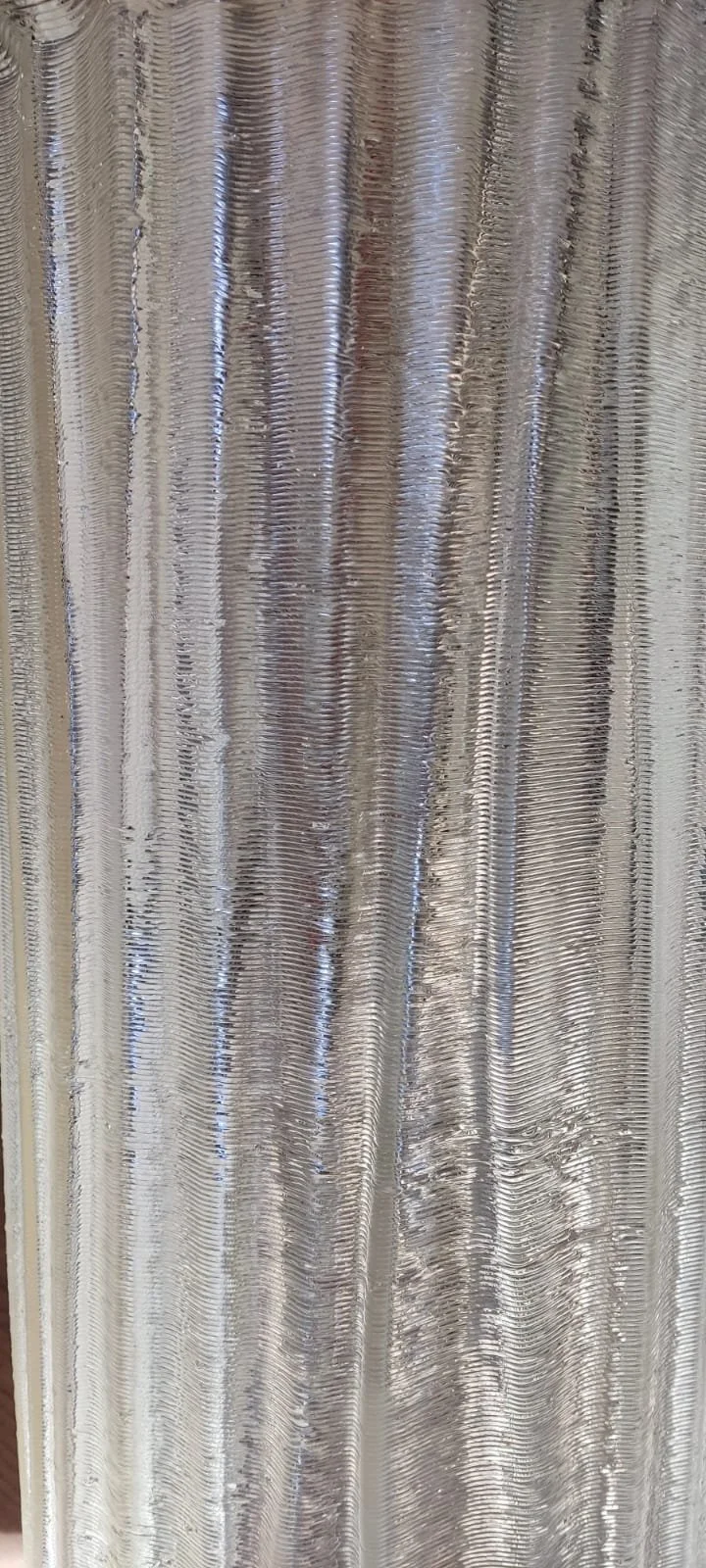
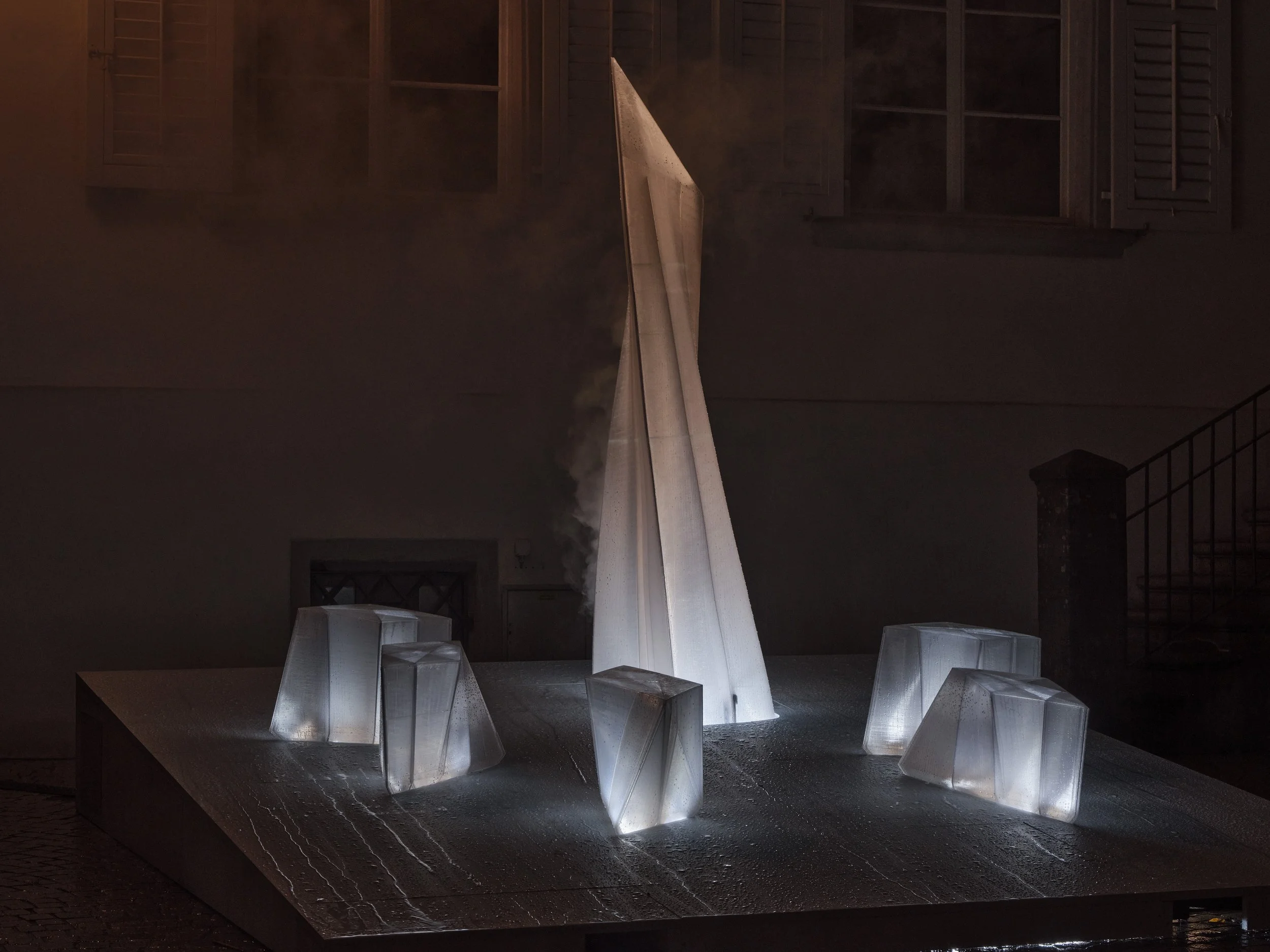
Sofia: I embrace digital craftsmanship. My sugar‑based stools use pigments that mix unpredictably in the extrusion, creating new striping every time. The Contour benches also produce gradients and patterns impossible to fully control. Even the crystalline PETG sculpture developed cracks while printing—a natural result of internal tension. Instead of flaws, they became part of the story, like real salt crystals. Imperfection adds life and authenticity.
Alexey: How can we achieve poetic expression through computational design methods?
Sofia: Poetry emerges when you allow systems to be spontaneous—when you let algorithms or machines ‘hallucinate.’ Digital craftsmanship itself is poetic: unexpected pigment flows, machine behaviors, emergent geometries. Giving the computational process freedom creates poetic accidents that no designer could plan.
Alexey: Where do digital processes intersect with organic, living systems?
Sofia: : The bridge is already there. Printed concrete can be brushed like stone. Printed clay must be fired like ceramics. Printed sawdust can be sanded and stained like wood. Ancient crafts fit naturally into post‑processing, finishing, and material behavior. High‑tech tools extend, not replace, craft traditions.
Alexey: What is the role of materiality for you? How can we integrate biodegradable, transparent, and compostable materials?
Sofia: Materiality defines both narrative and technology. I often reprint the same design in different materials because each becomes a different personality. Nearly all my projects use biomaterials or recycled waste—except the crystalline sculpture, which required medical‑grade PETG for optical reasons. I prefer biodegradable materials because they reduce long‑term harm and feel healthier in space.

Alexey: How do you navigate working across different countries and disciplines, and how do you adapt your approach to local contexts, materials, and cultures?
Sofia: My practice expanded internationally because each project grows from its local context—Austria’s Alpine geography shaped the Contour benches; LA’s cannabis and wellness culture inspired Hempler; sugar companies commissioned sugar‑based installations. Starting during COVID pushed me toward robotics because robots could work when humans couldn’t. My Austrian/Polish background brings craft and resilience; London adds cosmopolitan design culture; LA opened pathways into wellness, sound, and experiential design. Each place reshapes my work.